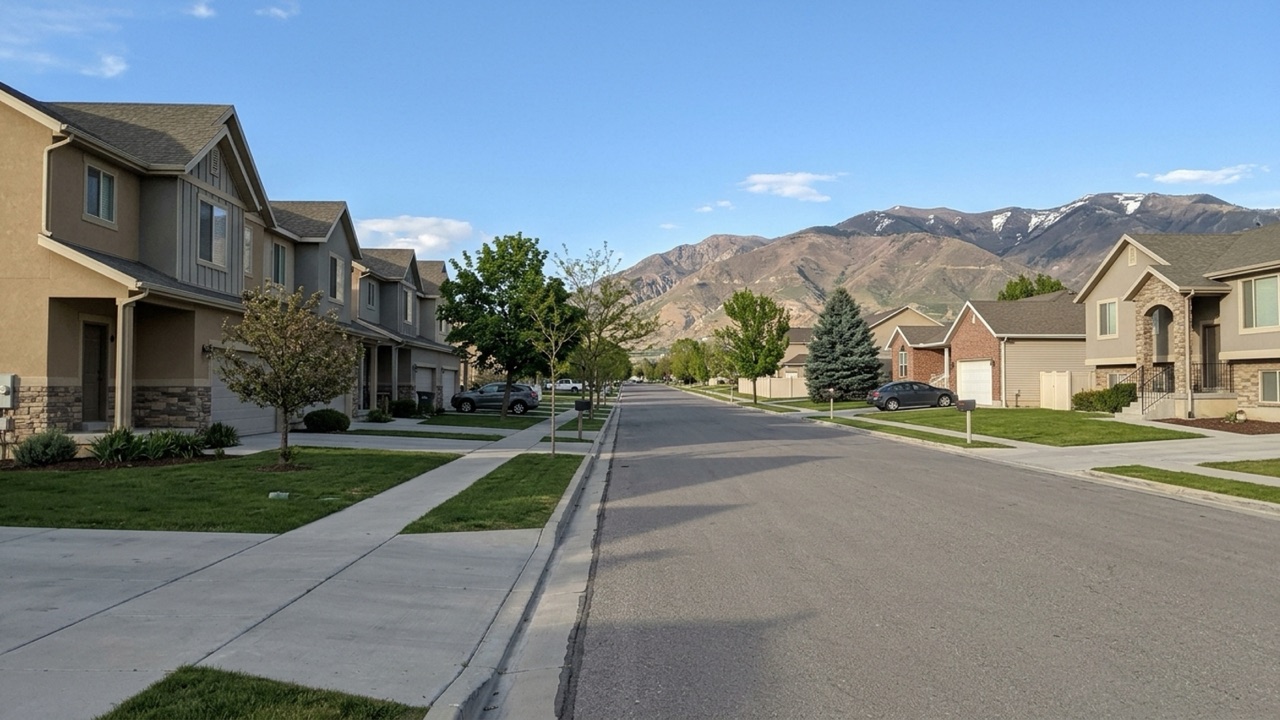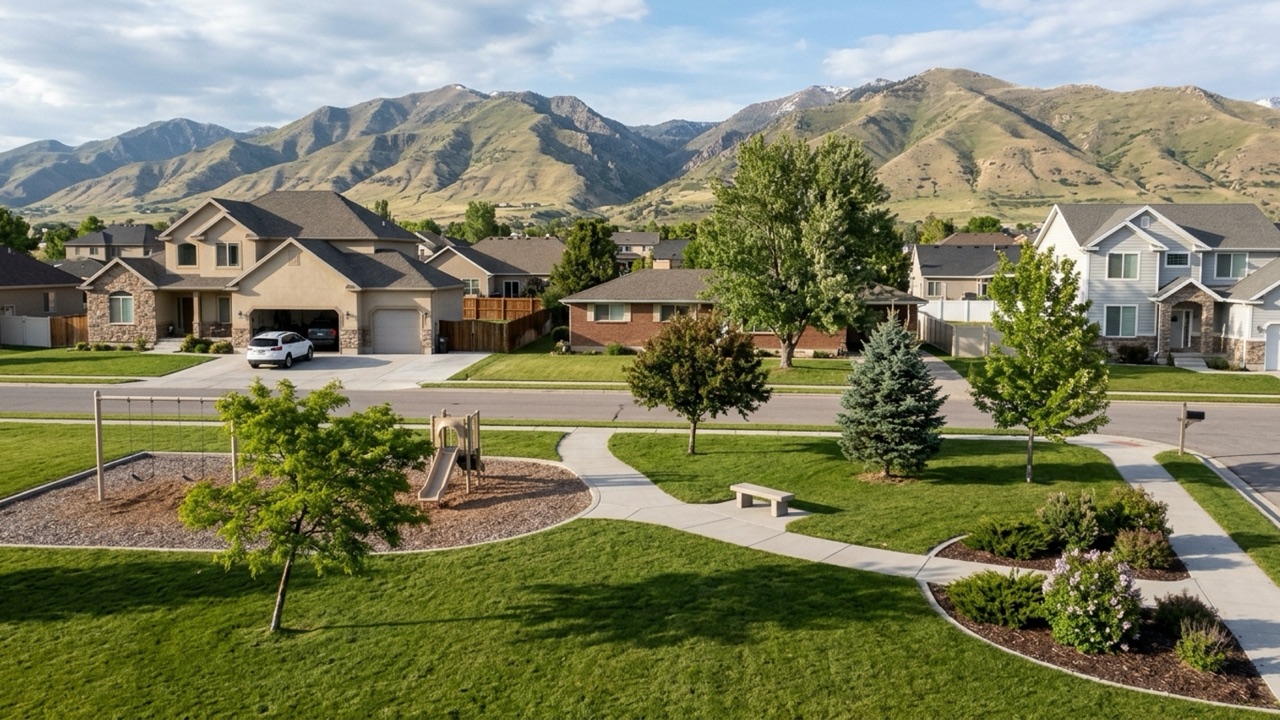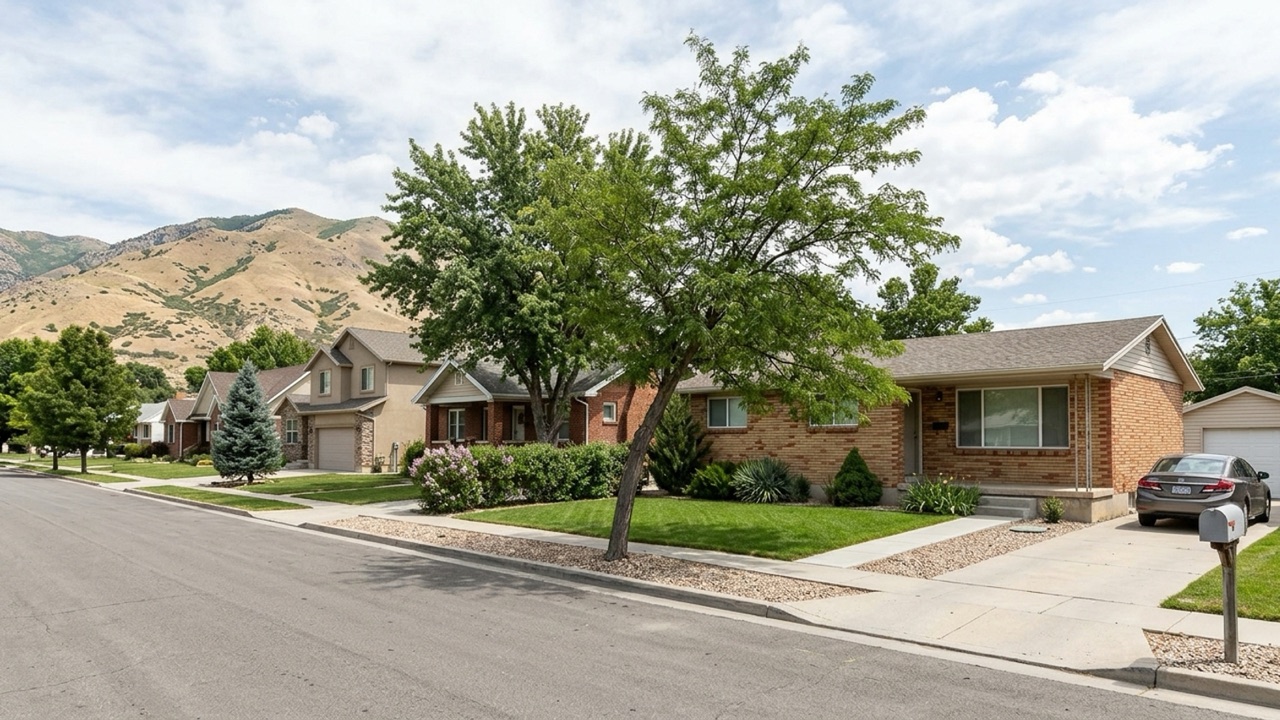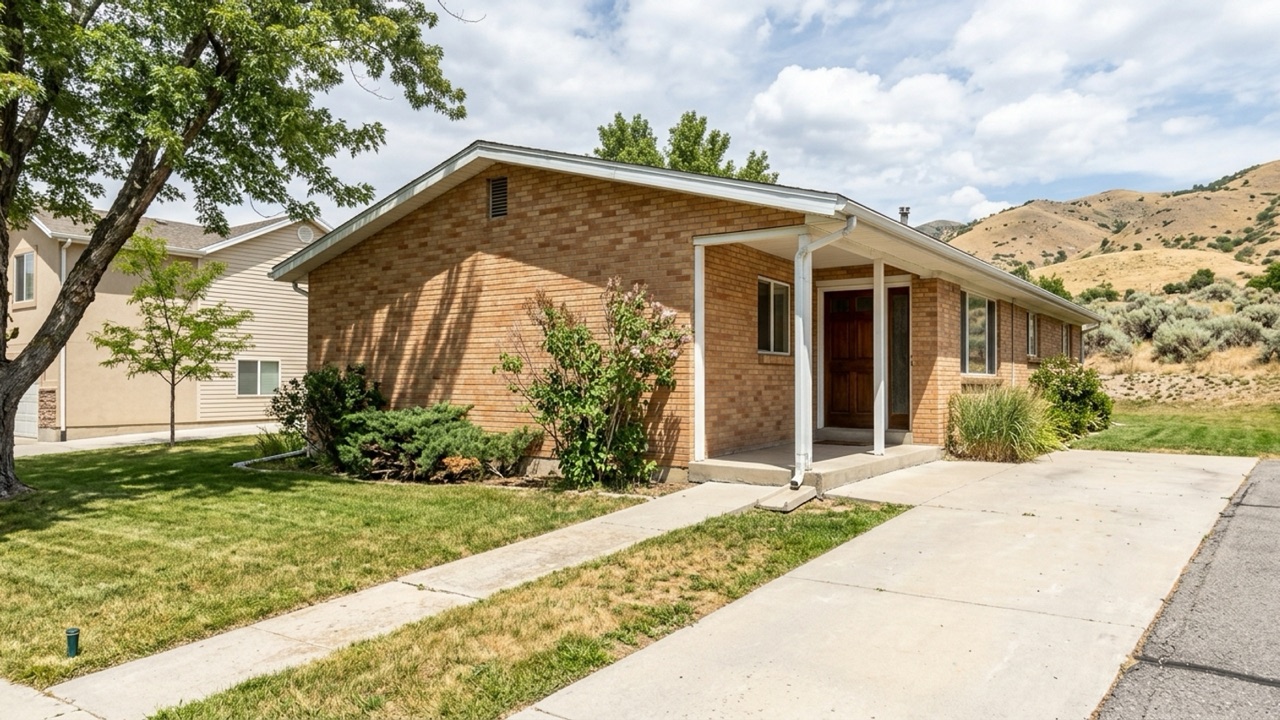
Magna's weather is, first and foremost, a home-inspection question. Sitting on the west edge of the Salt Lake Valley near the Great Salt Lake and the Oquirrh foothills, the area gets lake-effect snow, winter inversions, hot dry summers and high winds.
Key Takeaway
Magna has four distinct seasons, with snowy, inversion-prone winters and hot, dry summers, making the roof, furnace filtration, cooling, and snow removal your main inspection priorities. If you prefer to hand exterior upkeep to a homeowner association, start with townhouses, whose median sale price runs roughly $75,000 below single-family homes. If you want a yard and a garage, a house means owning every weather repair yourself.
Who This Guide Is For
You are weighing a home in Magna and want to know how its winters, summers, and air will shape what you inspect, pay for, and maintain before you make an offer.
How Magna's Weather Shapes the Home You Buy
Each of Magna's weather patterns lands on a specific part of the house, and the local market gives you time to check them. Homes in Magna recently sold in a median 62 days at 99.4% of list price, based on the 90 days ending September 30, 2026. That pace gives you enough time to dig into weather-related wear and still ask the seller for repairs before closing.
For the bigger picture, see Pros and Cons of Living in Magna.
Why Magna's Forecasts Come from the Airport
The National Weather Service forecast page for Magna lists Salt Lake City International Airport as its observation station. Magna has no long-record official weather station of its own, so most online climate averages rely on those airport numbers.
Magna sits on the valley's west edge, closer to the Great Salt Lake and at the foot of the Oquirrh Mountains. Wind, drifting snow and runoff can therefore differ from the airport readings at street level. Ask the sellers and neighbors how a specific lot handles them.
What Type of Climate Magna Has
Under the Köppen climate classification, the Salt Lake City area is either Mediterranean or dry-summer continental, depending on which variant of the system is used. It borders on a cold semi-arid climate because of relatively low precipitation. In practice, that means four distinct seasons, dry air and sharp temperature swings between summer and winter.
The "dry" label undersells the valley's winters.
Winter Weather in Magna
Based on 1991-2020 climate normals for Salt Lake City International Airport, January brings an average low of 23°F and a high of 38°F. The annual average low is around 44°F. Winter is the most expensive season for home upkeep: freeze-thaw cycles, heavy snow loads and poor air quality decide how hard a home's exterior and mechanical systems have to work.
Cold Months and When Snow Arrives
The median first measurable snow arrives around November 5, and the last snowfall of the season typically comes by mid-April. Through those months, temperatures routinely drop below freezing at night and climb back above it during the day. That freeze-thaw cycle cracks concrete driveways and walkways, and it stresses roofs and gutters over time.
When you tour a home in winter, look for heaved slabs and ice staining at the eaves. Both are signs the property takes the full force of the cold-season swings.
Lake-Effect Snow from the Great Salt Lake
Cold air crossing the warmer, unfrozen Great Salt Lake sets up narrow snow bands. These hit some parts of the valley hard while leaving others dry. University of Utah atmospheric science research shows the lake helps generate an average of about a dozen lake-effect storms each winter. National Weather Service advisories name areas like the northwestern Salt Lake Valley among those affected.
Valley-wide forecasts can miss a localized band entirely. A steep or north-facing driveway holds ice for days after a storm, so check the slope and orientation when you tour.
Winter Inversions and Air Quality
Cold air frequently gets trapped under warmer air in the valley during winter, holding pollution near the ground for days at a time. Utah's Division of Air Quality publishes daily air-quality action days during inversion season so residents know when particulate levels are high.
You can't change the air outside, so the home's furnace and filtration (see the check below) matter more here than in most places.
Driving and Commuting in Winter
Snow and inversion fog regularly affect commutes out of the west valley toward Salt Lake City. Side streets aren't always plowed first after a storm. Check Salt Lake County's snow-removal information, or ask neighbors whether your street is a priority plow route.
Summer Heat, Storms and Wind in Magna
July brings an average high of 94°F and an average low of 69°F, and the annual average high is around 65°F. Summers are hot and dry, with large day-to-night temperature swings and very little rain through the middle of the season. Warm-season weather costs owners money through cooling bills, irrigation and wind repairs.
Hot, Dry Summers
The dry heat makes cooling a major household expense. Find out whether a home relies on central air conditioning or an evaporative cooler. Last summer's utility bills, covered under moving season below, are the most direct way to see what it costs to keep the property comfortable in July and August.
Monsoon Thunderstorms and Flash Flooding
Late summer brings a monsoon pattern in which moisture from the south creates short, intense storms. They bring gusty outflow winds and localized downpours that test a property's drainage, so a dry summer can end in a sudden deluge.
Look at window wells, basement entries and how the yard slopes. Water should move away from the foundation, not toward it.
Wind Off the Lake and the Oquirrh Mountains
The west valley sees strong frontal winds, storm outflows and downslope winds off the Oquirrhs. The National Weather Service routinely issues Wind Advisories for the Salt Lake Valley.
Wind finds weak points. Ask whether shingles have been replaced after storms, and check fence posts and gates for stability.
Wildfire Smoke
Smoke from regional wildfires often settles in the valley during late summer. The Utah Division of Air Quality tracks hourly conditions for Salt Lake County and issues alerts when wildfire smoke causes high particulate concentrations.
Smoke days fall in the season you might otherwise want the windows open. A sealed, well-filtered HVAC system matters as much in August as during a January inversion.
Tornadoes and Other Rare Severe Weather
Tornadoes are uncommon in Salt Lake County, but they have occurred. According to the National Weather Service, an F2 tornado struck the Salt Lake City metro area in August 1999 and caused more than $170 million in damage. Another F2 hit Magna itself in February 1965. Confirm with your insurer what a standard homeowners policy covers for wind and hail damage.
Weather Checks Before You Buy in Magna
At that selling pace, you generally have enough time to get answers before your inspection deadlines expire. The inspection period and repair requests depend on your specific contract.
Roof and Gutters
Snow load, freeze-thaw cycles, ice at the eaves and high winds make the roof your first weather check. Ask for the roof's age and any repair or replacement receipts, and look for ice-dam staining and loose shingles.
A general home inspection notes visible wear but can't promise how many winters a roof has left. A roofer's opinion is a separate step, and shingles are hard to assess when they're buried under snow.
Furnace, Cooling and Air Filtration
One mechanical system faces both extremes: heating the home through inversion season and cooling it through dry summer heat. Ask for the furnace and AC (or evaporative cooler) age, service records and filter rating, and whether the home has any whole-house filtration.
Inspectors often can't fully test air conditioning in cold weather, or heating on a hot day. Ask your inspector which systems they can test given the current season.
Sprinklers, Drainage and Water Use
Dry summers require irrigation, which means higher water bills and following local rules. Magna Water District's Level 1 Water Conservation policy prohibits outdoor watering with district-provided water between 10:00 AM and 6:00 PM. The exceptions are special, temporary situations such as newly planted lawns. The secondary irrigation water system typically turns on around April 15.
Sprinkler systems must be drained before the first hard freeze. Ask whether the lines were winterized before the last freeze, because a cracked underground line won't show up until spring.
Insurance for Floods and Earthquakes
Flood and earthquake coverage sit outside a standard homeowners policy. You can look up the flood zone designation for a Magna parcel by address on FEMA's Flood Map Service Center.
The Utah Insurance Department states that standard policies do not cover earthquake damage. Coverage must be added as an endorsement or purchased separately, usually with a 10- to 30-day waiting period. Get flood and earthquake quotes during your inspection period, not after closing, because premiums vary by address.
Best Time to Buy or Move to Magna
A winter move means snow, short daylight hours and possible inversion days while loading a truck. A summer move means intense heat and monsoon storms. No season is perfect, but each one changes what the house reveals.
Moving in Winter or Summer
Whatever season you buy in, you'll only see the house perform in those conditions. Tour in July and you're guessing how the driveway handles ice; tour in January and you're guessing how hot an upstairs bedroom gets.
Ask the seller how the home performs in the opposite season. Request last summer's and last winter's utility bills to check heating and cooling costs, and ask about snow drifting or standing water in the yard. If you're selling a home in Magna, having those bills ready helps buyers budget accurately.
Single-Family Homes: You Own Every Weather Repair
A house usually comes with a yard and a garage for snow gear, but you also own the roof, driveway, sprinklers and HVAC system. These homes move faster, with a median 50 days on market and 28.8% selling above list price over the 90 days ending September 30, 2026.
That faster pace leaves less time to line up a roofer or an HVAC check before competing offers arrive. It also leaves less room to negotiate fixes than you might have with a townhouse. When buying a home in Magna, having those specialists lined up before you tour helps you act within that window.
Townhouses: The HOA May Handle Snow and Roofs
Many homeowner associations cover snow removal and exterior or roof upkeep, though you must confirm this in each HOA's documents. Townhouses sat a median 92 days with 5.5 months of supply (based on 24 sales, 90 days ending September 30, 2026), which points to a slower pace with more negotiating time.
You pay for that upkeep through monthly dues, and a thin reserve fund can lead to a special assessment when the roofs need replacing. Ask the HOA for current dues, what they cover and the latest reserve study.
At a Glance
- All homes, median sale price: $439,041, down 0.2% year over year (102 sales, 90 days ending 2026-09-30)
- All homes: median 62 days on market, 99.4% sale-to-list, 27% sold above list (90 days ending 2026-09-30)
- All homes: 4.1 months of supply, 136 homes in inventory, median $225 per square foot (90 days ending 2026-09-30)
- Single-family, median sale price: $467,814, up 0.6% year over year (74 sales, 90 days ending 2026-09-30)
- Single-family: median 50 days on market, 99.3% sale-to-list, 28.8% sold above list, 3.4 months of supply, 82 in inventory, median $226 per square foot (90 days ending 2026-09-30)
- Townhouse, median sale price: $393,005, down 0.2% year over year (based on 24 sales, 90 days ending 2026-09-30)
- Townhouse: median 92 days on market, 99.5% sale-to-list, 17.3% sold above list, 5.5 months of supply, 43 in inventory, median $220 per square foot (based on 24 sales, 90 days ending 2026-09-30)
Sources
- Redfin: Data Center
- Current Results: Salt Lake City Temperatures by Month
- EcoFlow: Utah Snow
- Wikipedia: Magna, Utah
- Wikipedia: Climate of Salt Lake City
- University of Utah: Lake-Effect Snow
- NWS: Wind Advisory Example
- Utah DEQ: Air Quality Conditions During Wildfires
- FEMA: Flood Map Service Center
- NWS: Salt Lake City Tornado History
- USGS: Magna Earthquake Event Page
- Utah Insurance Department: Disaster Preparedness
- Magna Water District: Irrigation Season Flyer
Magna Weather FAQs
Does It Snow in Magna, Utah?
Yes. The normal seasonal snowfall at Salt Lake City International Airport is 51.9 inches, with the snow season counted from July 1 to June 30. Lake-effect bands can make totals uneven, burying one neighborhood while another stays dry.
What Is the Weather Like in Magna, Utah?
Winters are cold and snowy with inversions, and summers are hot and dry. Spring and fall are relatively short.
Where Can I Check the 10-Day Forecast for Magna, Utah?
Use the National Weather Service's Magna point forecast. For inversion and smoke days, add the Utah Division of Air Quality's 3-day forecast for Salt Lake County.
What Elevation Is Magna, Utah?
Magna's elevation is 4,265 feet. That is close to the airport station's elevation, so the airport averages are a reasonable stand-in for Magna, though lake and foothill effects can still create differences at street level.
How Does Magna's Weather Compare with the Rest of Utah?
Southern Utah cities are warmer and drier, and mountain areas receive much more snow. Magna's valley-floor location adds winter inversions and lake-effect bands.
Is Magna, Utah a Good Place to Live?
If you're prepared to plan for winter inversions and summer heat, the climate is manageable. On the housing side, the all-homes median sale price was $439,041 based on 102 sales over the 90 days ending September 30, 2026.
How Big Was the Magna, Utah Earthquake?
The USGS recorded a magnitude 5.7 earthquake on March 18, 2020, centered just north-northeast of Magna. Ask the seller about any post-quake repairs or retrofits when you tour.
Is It Humid in Magna, Utah?
Generally, no. The dry air affects wood floors and trim, which makes humidifiers a common addition to homes in winter.
Market figures are approximate and change frequently. For current numbers on a specific home, talk with Abril.