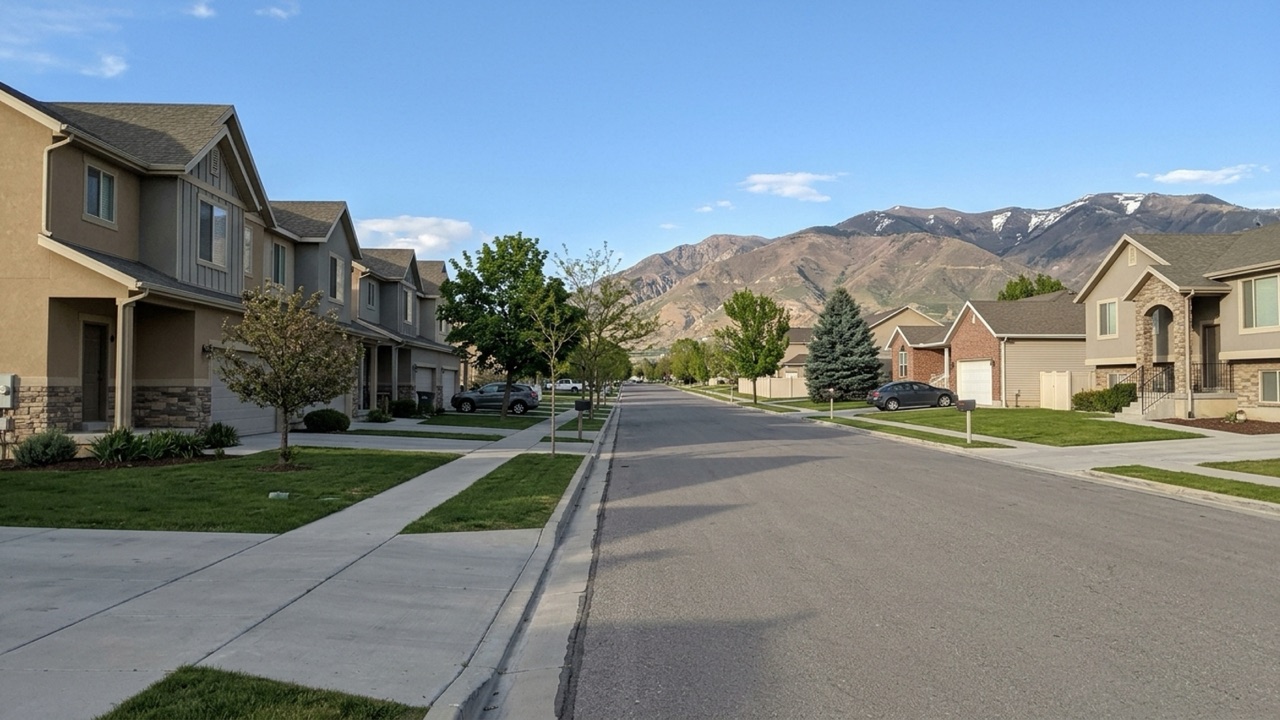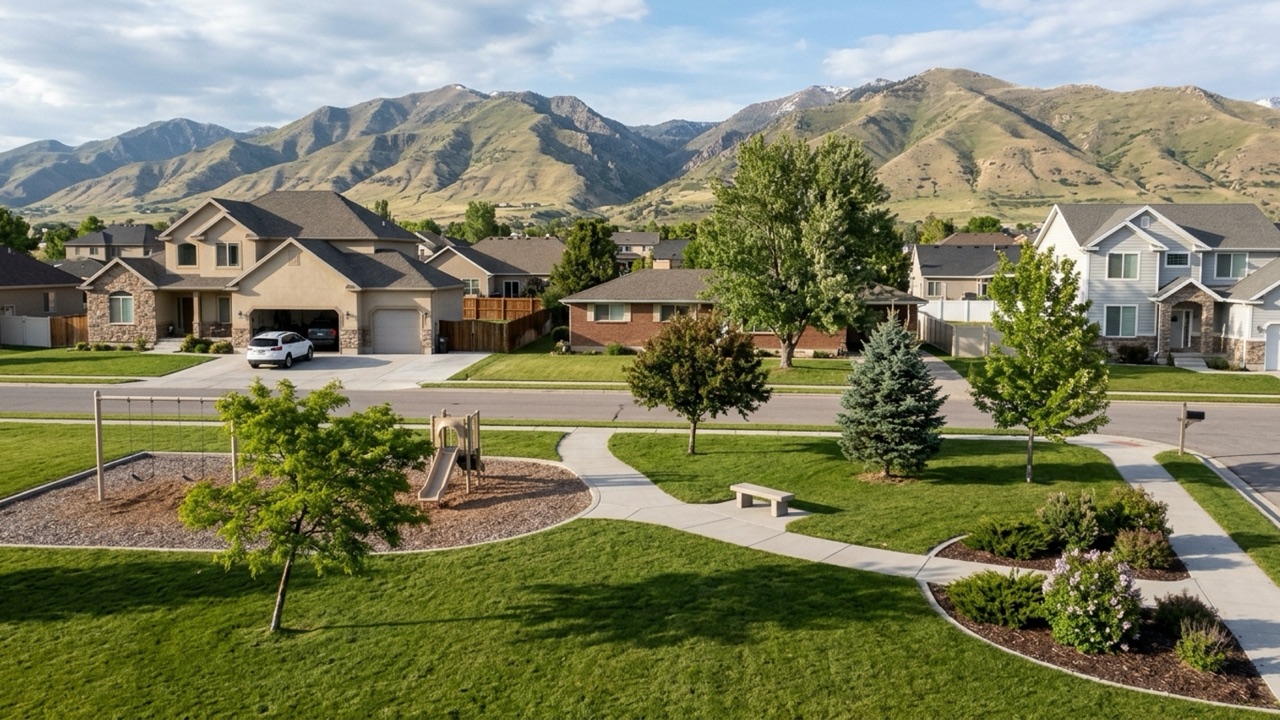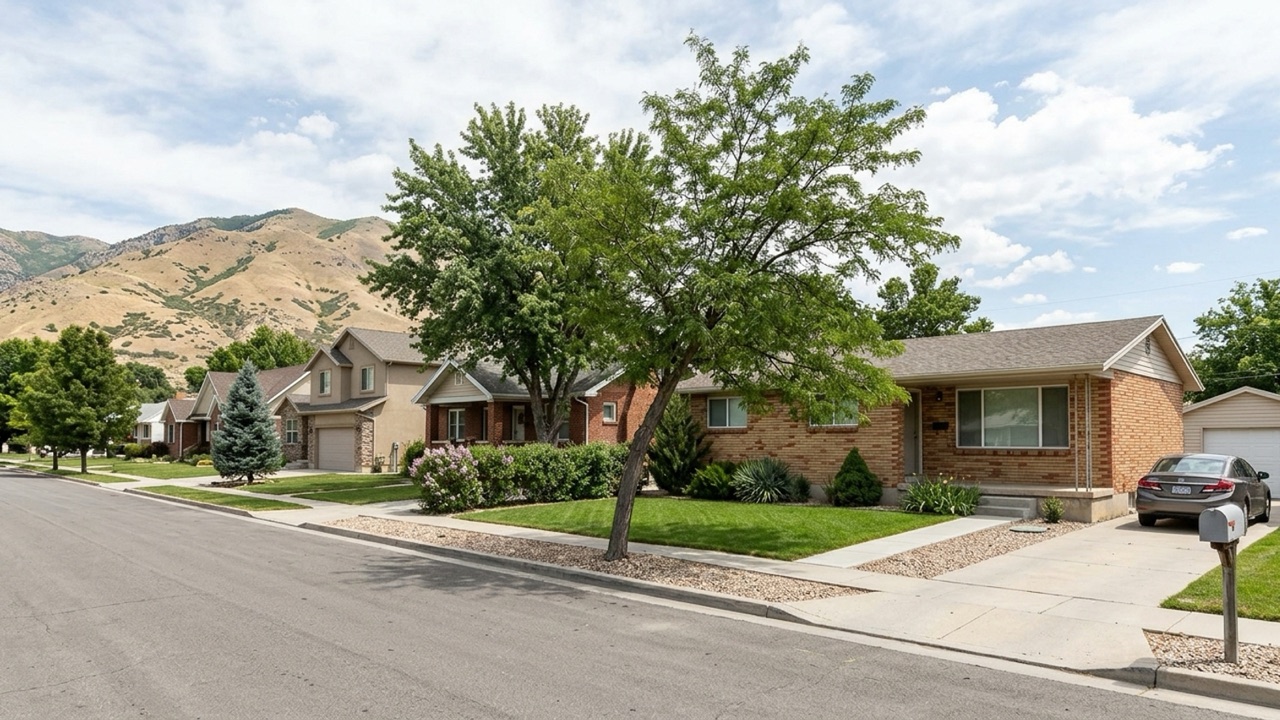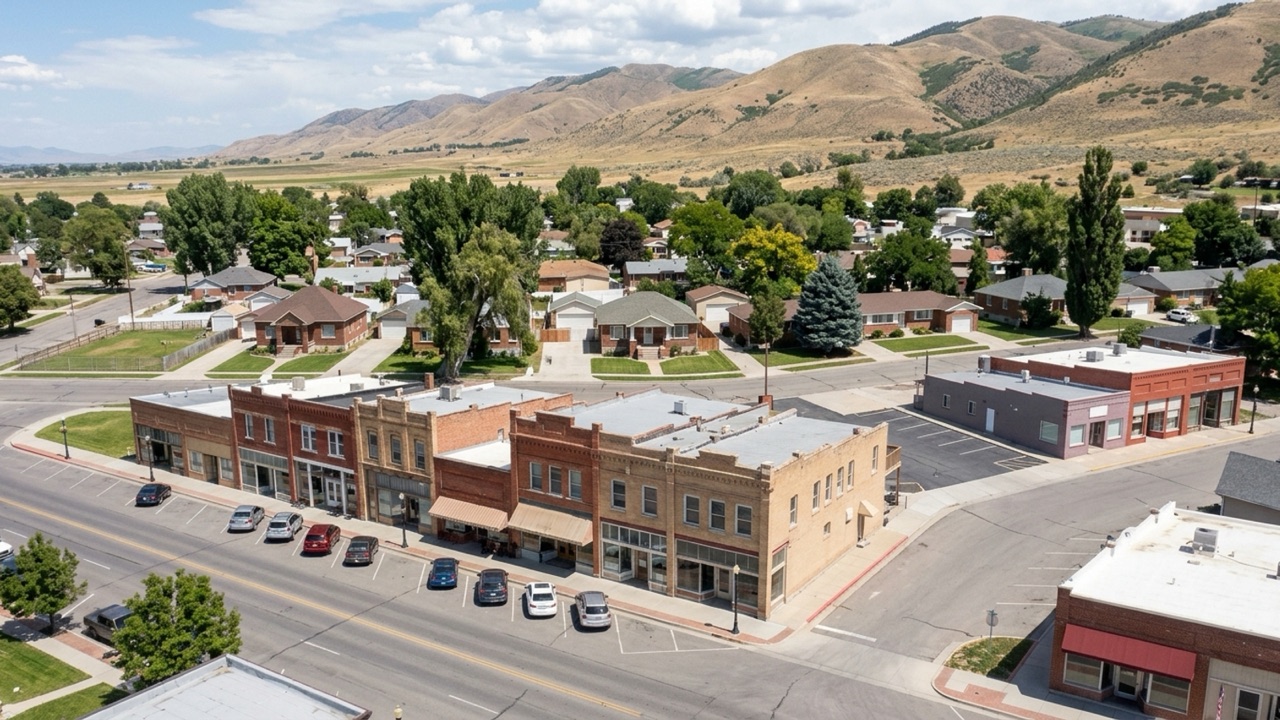
Magna sits in Salt Lake County's west valley, tucked just below the Oquirrh Mountains. The homes available here today are a direct reflection of how the area moved from an agricultural outpost to an industrial center and then kept growing outward from there.
That timeline matters when you're shopping. The age of a house here dictates what inspections you need, how the neighborhood is laid out, and how much negotiating room you hold.
Key Takeaway
Magna began as the farming settlement of Pleasant Green and grew into a copper-mill town in the early 1900s, which is why its historic Main Street core holds older properties and its later subdivisions hold newer ones. If you want character, start near Main Street and budget for an inspection that covers masonry after the 2020 earthquake. If you want room to negotiate, look at Magna townhouses, which have recently been taking a median 92 days to sell.
Who This Guide Is For
You're considering a home in Magna and want to understand how the town's past shapes the houses on the market, so you can decide between an older home near the historic core and a newer one.
How Magna's History Shaped Its Housing
The housing market in Magna spans over a century of development, reflecting four distinct eras. The original farm settlement and the early-1900s copper-mill boom left behind an older core of homes near the center of town. Postwar growth brought subdivisions and attached housing that spread the residential footprint outward. Then the 2020 earthquake introduced new inspection considerations for the area's oldest brick properties.
That's the arc. Each era left something behind on the ground, and knowing which one built the house you're touring changes what you ask for.
The Early Pleasant Green Farming Settlement
The area was originally settled by farmers who named their community Pleasant Green. The agricultural settlement relied on local irrigation to sustain crops in the west valley.
In 1906, state postal officials complained that the name was too similar to Pleasant Grove, another Utah town. The original name survives today primarily at the local Pleasant Green Cemetery.
Almost none of the original farm-era housing survives on the current real estate market. When you see properties marketed as historic in Magna, they almost entirely date from the subsequent mill era. Confirm a home's actual year built on the Salt Lake County assessor record before assuming it dates from the earliest settlement days.
The Copper Mill Era and Early Housing
The local economy shifted dramatically in 1906 when the Utah Copper Company constructed the Magna Mill to process ore from Bingham Canyon. That same year, the Garfield Smelting Company began operations at a nearby smelter to reduce the copper concentrates. The town eventually took its new name directly from the mill.
The industrial operations required a massive workforce, drawing workers from across the country and abroad. That sudden influx created immediate demand for modest worker housing near the mill and Main Street. Compact early-1900s homes on small lots near the town center are what that era left behind.
When you're touring these older properties, ask your home inspector to check original wiring, older plumbing, and the condition of the sewer lateral. These are the things that age without notice and surface late.
The Main Street Historic District Today
The Magna Commercial Downtown Historic District encompasses 15.33 acres and represents the area's original commercial center. It was nominated to the National Register of Historic Places in part to encourage the use of historic preservation tax credits following the 2020 earthquake.
Buyers interested in local history can visit the Magna Ethnic & Mining Museum, located right on West Magna Main Street. The surrounding blocks contain many of the homes built during the initial copper boom.
One thing to sort out before you close: if you're purchasing a property in or near this historic core, ask Magna planning or Salt Lake County whether any design review applies before you plan exterior changes. The city has adopted a mixed-use zone that governs private redevelopment on Main Street, requiring planning commission review for certain exterior modifications. That's not a reason to walk away, but know this before you start drawing up plans.
Postwar Expansion and Newer Construction
Magna's population grew from 22,770 in 2000 to 29,251 at the 2020 census, and that growth pushed residential development well beyond the original mill town. Subdivisions and attached housing spread outward from the historic core as the population increased. Magna's status as a municipality has also changed in recent years to accommodate this growth. You can review our guide to Magna neighborhoods if you want to explore these newer residential areas.
Newer construction generally means fewer age-related unknowns in the inspection. That said, if you're looking at attached homes in these newer subdivisions, ask the HOA for current dues, what they cover, and any recent or planned special assessments. The inspection is cleaner; the HOA paperwork still needs scrutiny.
How the 2020 Earthquake Affects Older Homes
A notable earthquake centered near Magna occurred in 2020, making seismic readiness a real consideration for local buyers, not an abstract one. Older brick properties and homes with unreinforced masonry require specific attention during the buying process.
Ask the seller for disclosure of any 2020 earthquake damage and repairs. Have your inspector specifically check chimneys, masonry, and foundations for signs of stress. An experienced local inspector matters here, and an agent can point you toward qualified professionals.
Standard homeowners, condominium, and renters policies in Utah do not cover earthquake damage. Ask your insurer whether earthquake coverage is available for the specific home and what it costs. The Utah Insurance Department notes that earthquake coverage usually has a waiting period between 10 and 30 days, and deductibles apply to each coverage separately.
What Magna's Eras Mean for Today's Buyers
The era of the home you choose directly affects your negotiating room. Townhouses currently take a median 92 days to sell compared to 50 days for single-family homes. Those figures cover the 90 days ending September 30, 2026, with the townhouse data based on a smaller sample of 24 sales. Because townhouses sit on the market longer, you have more time to compare options and negotiate terms.
The median price per square foot is nearly identical: $220 for townhouses and $226 for single-family homes. Townhouses carry a lower overall price because they offer less space, not a lower rate per foot. The full breakdown is in the at-a-glance list below.
For a deeper look at the numbers, you can review Magna housing market trends or learn more about the process of buying a home in Magna.
So here's how the eras translate into practical choices. If character is the priority, focus on the Main Street historic district and prepare for masonry inspections. If you'd rather have a newer layout with fewer unknowns, look toward the postwar subdivisions. If maximum negotiating room is what you're after, townhouses currently offer the most flexibility. If potential masonry repairs are a dealbreaker, stick to newer builds. And if the drive to Salt Lake City is a deciding factor, review commuting and transportation from Magna before you narrow your search by era.
At a Glance
- All homes, median sale price: $439,041 (90 days ending 2026-09-30), -0.2% year over year
- Single-family median sale price: $467,814 (90 days ending 2026-09-30, 74 sales), +0.6% year over year
- Townhouse median sale price: $393,005 (90 days ending 2026-09-30; based on only 24 townhouse sales, so treat as a rough guide), -0.2% year over year
- Median days on market: all homes 62, single family 50, townhouses 92 (90 days ending 2026-09-30; townhouse figure based on 24 sales)
- Sale-to-list ratio: all homes 99.4%, single family 99.3%, townhouses 99.5% (90 days ending 2026-09-30)
- Share sold above list price: all homes 27%, single family 28.8%, townhouses 17.3% (90 days ending 2026-09-30; townhouse figure based on 24 sales)
- Months of supply: all homes 4.1, single family 3.4, townhouses 5.5 (90 days ending 2026-09-30)
- Homes for sale (inventory): all homes 136, single family 82, townhouses 43 (90 days ending 2026-09-30)
- Median price per square foot: all homes $225, single family $226, townhouses $220 (90 days ending 2026-09-30)
Sources
- Utah Division of State History: Magna MPDF
- History to Go: Copper Mining in the Oquirrh Mountains
- Archives West: Kennecott Copper Corporation, Utah Copper Division records
- City of Magna: History
- Salt Lake County: Magna Historic District
- Utah Division of Arts & Museums: Utah Museums Directory
- Utah Public Notice Website: Magna Planning Commission Packet
- Unified Fire Authority: Magna Township
- USGS: M 5.7 - 5km NNE of Magna, Utah
- Utah Insurance Department: Disaster Preparedness
- Rome2Rio: Magna to Salt Lake City
- Granite School District: Senior High Schools
- Redfin: Data Center
Magna, Utah History FAQs
What Does the Name Magna Mean?
The name Magna is derived from the Latin word meaning "great" or "superior." D.C. Jackling chose the name for the Magna Mill when he established the Utah Copper Company. The surrounding town eventually adopted the name directly from the mill.
How Far Is Magna from Salt Lake City?
The driving distance between Magna and Salt Lake City is approximately 14 to 15 miles. The trip takes about 18 minutes by car when following the UT 201 route. You can check our guide to commuting and transportation from Magna for more details on getting around.
Is Magna, Utah a Good Place to Live?
Whether Magna fits your needs depends on your specific priorities and budget. The area currently has 4.1 months of housing supply, indicating a roughly balanced market where buyers have time to compare options. You can read our breakdown of the pros and cons of living in Magna to help weigh your decision.
Is Magna a City?
Yes, Magna is currently a city. It operated as a metro township starting in January 2017 before officially converting to a city on May 1, 2024.
What County Is Magna, Utah In?
Magna is located in Salt Lake County. You can learn more about the local area in our Magna zip code guide.
How Big Was the Magna Earthquake?
The Magna earthquake had a magnitude of 5.7. It occurred on March 18, 2020, with an epicenter located 5 kilometers north-northeast of Magna at a depth of 11.9 kilometers.
What School District Is Magna, Utah In?
Magna is served by the Granite School District, which operates multiple elementary, junior high, and high schools in the community. Always confirm a specific address using the district's boundary lookup rather than relying on listing descriptions. For more information, review our guide to schools and services in Magna.
What Elevation Is Magna, Utah?
You can check the USGS Geographic Names Information System for the official elevation of Magna. The city sits in the west valley directly below the Oquirrh Mountains.
Market figures are approximate and change frequently. For current numbers on a specific home, talk with Abril.